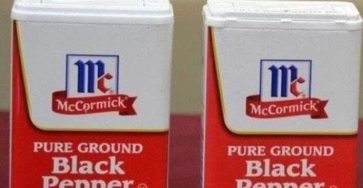
Many People Cannot Tell the Difference Between These Things
Why Our Brains Get Tricked by Similarities — and What It Says About How We Think
Every day, we rely on quick judgments to make sense of the world. We see something, label it, and move on. But sometimes, our brains take shortcuts — and we end up confusing things that only seem alike on the surface.
From food to feelings, from tech to language, there are dozens of things people constantly mix up — and it’s not because we’re careless. It’s because our brains are wired for pattern recognition. We look for what’s familiar, not what’s different.
Here are some of the most commonly confused pairs, and the real reasons why we can’t always tell them apart.
1. Baking Soda vs. Baking Powder
They look identical, both sit in the baking aisle, and both make cakes rise — but they’re not the same.
- Baking soda is pure sodium bicarbonate. It needs an acid (like lemon juice or buttermilk) to activate and release carbon dioxide bubbles.
- Baking powder contains both baking soda and acid, so it’s a complete leavening system on its own.
Why we confuse them: They serve the same function — rising dough — and come in nearly identical packaging. But using the wrong one can make cookies flat or bitter!
2. Iced Coffee vs. Cold Brew
At first glance, both are just coffee served over ice — right? Not quite.
- Iced coffee is brewed hot, then cooled or poured over ice.
- Cold brew is steeped in cold water for 12–24 hours, producing a smoother, less acidic drink.
Why we confuse them: They’re both cold coffee, but the flavor and caffeine levels differ — cold brew is stronger and less bitter.
3. Yams vs. Sweet Potatoes
Even grocery stores mix these up. In most U.S. supermarkets, what’s labeled “yams” are actually orange-fleshed sweet potatoes.
Real yams are starchy, white, and native to Africa and Asia — and they look nothing alike.
Why we confuse them: Centuries of marketing mix-ups and regional naming habits blurred the lines.
4. Quartz vs. Diamond
Both sparkle beautifully, but only one can cut glass.
- Diamond: The hardest natural material on Earth, with fiery light dispersion.
- Quartz: Much softer and cheaper, though it can mimic diamond’s shine in jewelry.
Why we confuse them: Our brains associate sparkle with value — but real diamonds have a distinct brilliance and sharpness that fakes can’t match.
5. Empathy vs. Sympathy
These two emotional terms sound interchangeable, but they describe different reactions:
- Sympathy is feeling for someone — pity or compassion.
- Empathy is feeling with someone — sharing their emotional experience.
Why we confuse them: Both involve caring, but empathy goes deeper — it’s about perspective-taking, not just emotion.
6. Weather vs. Climate
A classic mix-up in conversations about the environment.
- Weather is what’s happening right now — today’s rain, tomorrow’s sunshine.
- Climate is the long-term average pattern of weather over decades.
Why we confuse them: Because we experience weather daily, it’s easy to think a few cold days mean “climate change isn’t real.” But climate is the big picture.
7. Wi-Fi vs. Internet
People often say “my Wi-Fi is down” when they really mean “my Internet is down.”
- Wi-Fi is a local connection — it links your device to your router.
- Internet is the vast network your router connects to.
Why we confuse them: The two work together, so when one fails, it feels like both are gone.
8. Energy vs. Power
They sound similar, but in physics they’re not.
- Energy is the capacity to do work (measured in joules).
- Power is how fast you use or produce that energy (measured in watts).
Why we confuse them: Everyday language blurs technical definitions — we talk about “saving power” when we really mean conserving energy.
9. “Affect” vs. “Effect”
Grammar lovers know this one well.
- Affect (verb): to influence something.
- Effect (noun): the result of that influence.
Why we confuse them: They sound nearly identical, and both describe change — just from different angles.
10. Champagne vs. Sparkling Wine
All champagne is sparkling wine, but not all sparkling wine is champagne.
- Champagne must come from the Champagne region of France and follow strict production rules.
- Sparkling wine is the general term for bubbly wine from anywhere else.
Why we confuse them: Marketing and luxury culture turned “champagne” into a generic word for all bubbly drinks.
Why We Confuse Things So Easily
Our brains are pattern machines. Instead of analyzing every detail, we use shortcuts called schemas — mental templates that help us recognize things quickly.
It’s efficient but imperfect. We focus on familiar cues (shape, color, sound) and overlook subtle differences.
Common psychological reasons:
- Similarity bias: We group similar things together.
- Familiarity effect: We trust what we already know, even if it’s slightly wrong.
- Cognitive laziness: The brain conserves energy by guessing instead of analyzing.
- Language habits: Words evolve faster than meaning — leading to confusion.
Why It Matters
Mixing up baking powder and baking soda might ruin a batch of cookies.
Confusing empathy with sympathy might affect relationships.
Blurring climate with weather can distort how we understand the planet.
Knowing the difference helps us think more clearly, make better decisions, and communicate more precisely.
Final Thought
In a world overflowing with information, clarity is power.
Learning to spot the small distinctions — between ingredients, ideas, and emotions — doesn’t just make us smarter cooks or speakers.
It makes us more mindful humans.